
The problem
She wanted a portfolio that looked like her, one she could update herself — 116 artworks, three languages, an always up-to-date PDF — without calling a developer for every new piece.
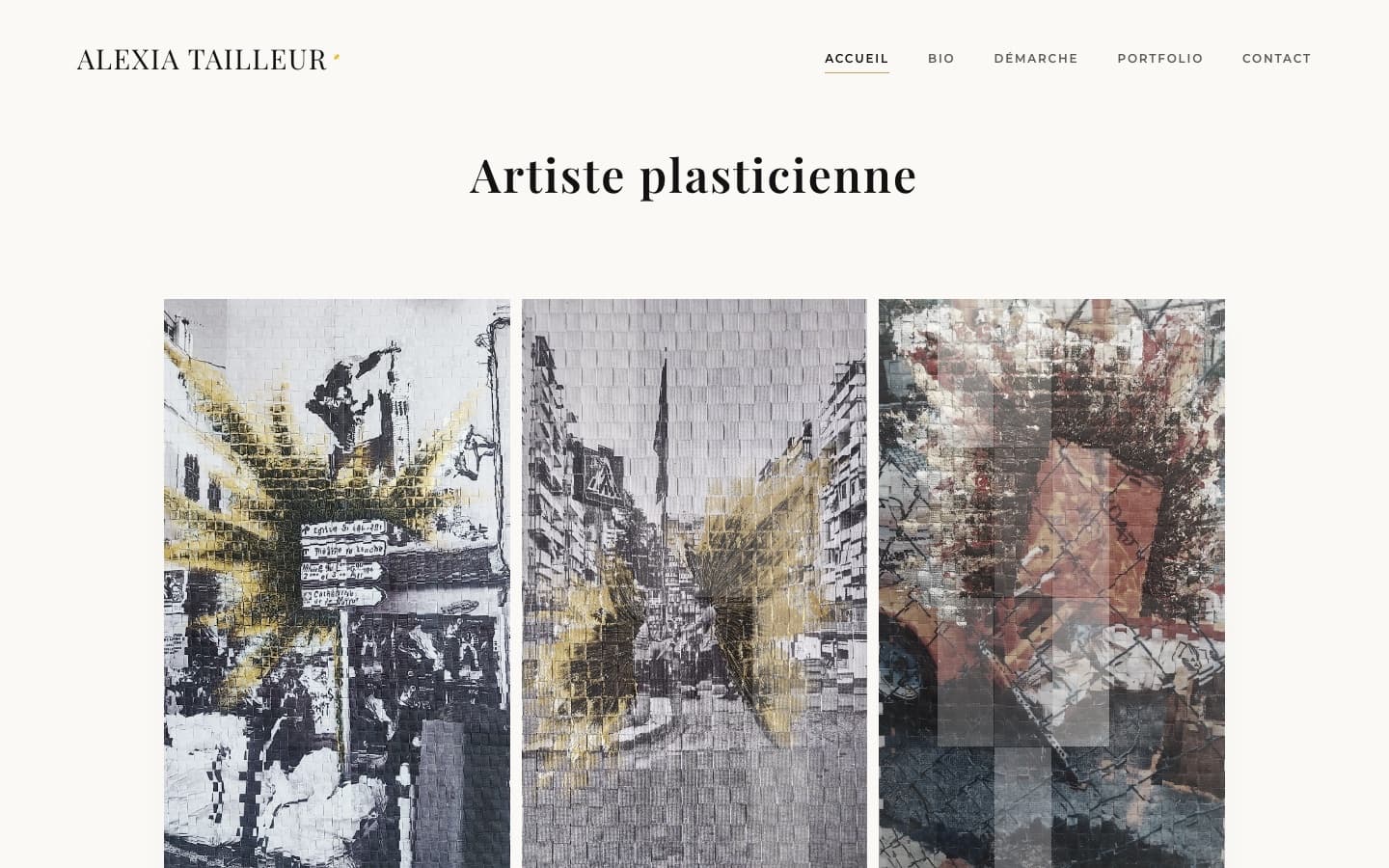
She wanted a portfolio that looked like her, one she could update herself — 116 artworks, three languages, an always up-to-date PDF — without calling a developer for every new piece.
Custom-built site backed by PocketBase: she adds or edits an artwork or a series, and everything else updates automatically. A user manual lets her run the tool completely on her own.
A static site (HTML, CSS, JavaScript) rather than a CMS: fast, no plugins to update, with a layout drawn entirely around her work. The data — series, artworks, display order — lives in a self-hosted PocketBase that Alexia manages from its admin interface.
Every change triggers n8n automations: a PocketBase hook detects a real change in the French text and calls DeepL for English and Italian; the portfolio PDF is regenerated (n8n and Gotenberg) and stays downloadable at a stable address.
For search visibility, a weekly redeploy syncs modification dates with the database, and the site exposes JSON-LD structured data and an llms.txt file so search engines and AI assistants can read it.
Series names and descriptions are translated automatically into English and Italian, only when the French text actually changes. Her manual corrections are never overwritten.
The series dropdown adjusts to the series present in the database.
The portfolio PDF that visitors can download is regenerated after every change. With over a hundred artworks it was getting heavy: it was optimized down to about 11 MB, so it stays light and easy to share even as the catalog grows.
The database is backed up every week.
She chooses which artworks appear in each part of the site, and in what order.
A user manual was provided so she can get started completely on her own.